


Tucked away in Kings Mountain, N.C., behind a temperature- and humidity-controlled vault door, lies a one-of-a-kind collection: Duke Energy’s corporate archives, comprised of tens of thousands of artifacts, photos, documents and mementos that tell the story of Duke Energy and its legacy utilities.
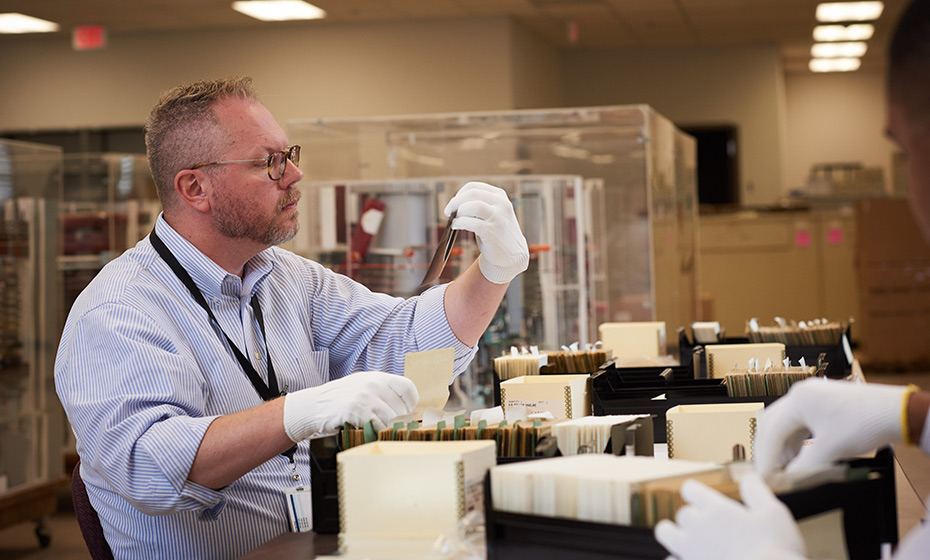
At its center is Chris Hamrick, Duke Energy’s corporate archivist and librarian. He works across the company’s service areas to curate, preserve and share Duke Energy’s physical memory – everything from century-old power meters to handwritten engineering notes from the early 1900s.
“Archives is the corporate memory,” Hamrick said. “It’s the family photo album, the storybook, the box of heirlooms passed on from your grandmother – except we keep them for the company, and we use them every day.”

A fascinating career
Hamrick said people often give him puzzled looks when they find out what he does for a living.
“There’s always a moment of curiosity,” said Hamrick. “People are shocked we even have a corporate archive. But once I explain what we do and the kind of things we’ve preserved, they’re fascinated.”
He’s found support across the company in the form of what he calls “archives ambassadors” – employees who help identify items of historical significance during facility cleanouts, office renovations and retirement celebrations.
“They’re my eyes and ears in the field,” Hamrick said. “They’ll send me a photo or a note and say, ‘Hey, you might want to see this.’ That’s how we find the good stuff.”
What kind of ‘good stuff’?
On a recent trip to Duke Energy’s regional headquarters in Cincinnati, Ohio, Hamrick worked his way from the 1920s building’s multiple basements through its 16th floor attic. That’s where he uncovered a dusty artifact from the 1920s: a system load chart from Union Gas and Electric – one of the legacy companies that eventually became part of Duke Energy.
“It shows power usage over a 24-hour period,” he said. “It gives us a glimpse into operations nearly a century ago. That’s something you just don’t find in a digital file.”
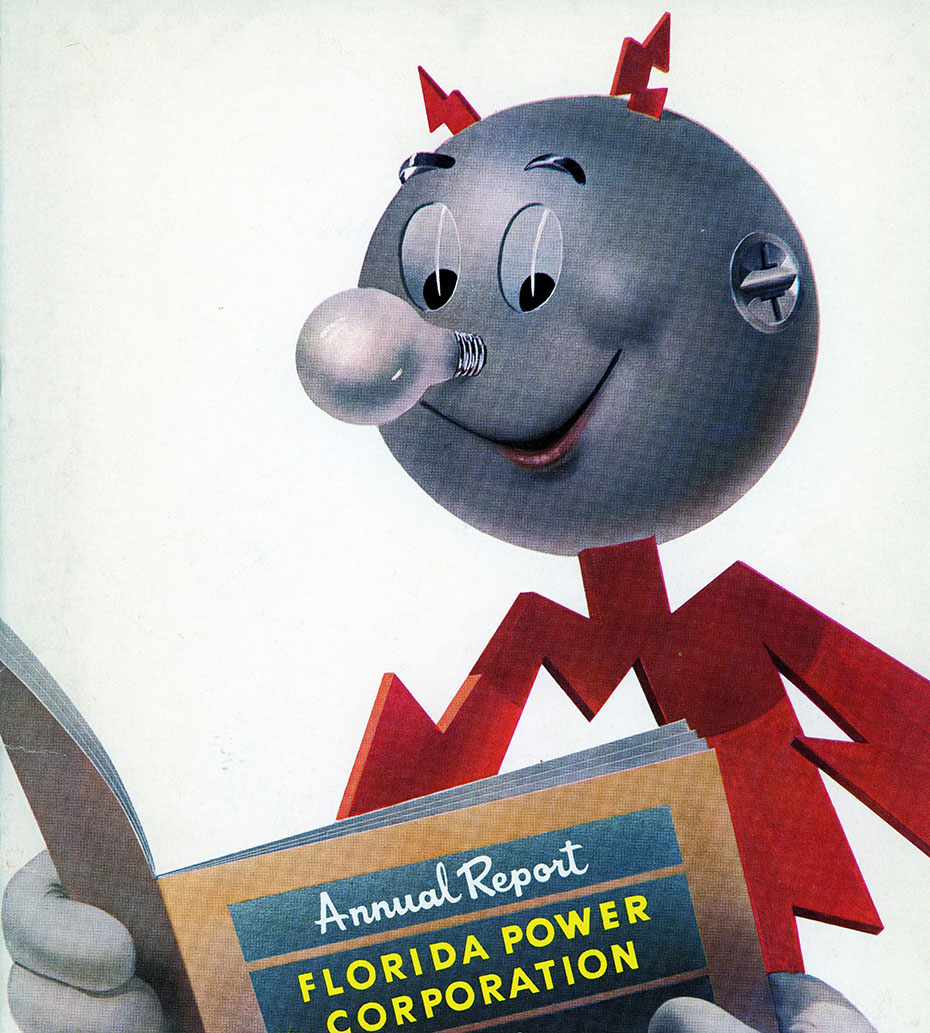
Hamrick also uncovered a scale replica of a tugboat, named Reddy Kilowatt, that was part of the Cincinnati Gas & Electric fleet of harbor tugboats used on the Ohio River.
“The model was about 4 1/2 feet long and covered in dust, plastic and more dust in a storage area of the parking deck,” said Hamrick. “Once I get it to our archives, we’ll work to restore it. Already, I’ve discovered a news article saying the model was built by an employee and presented to CG&E’s president in May 1968. It was later displayed at the company’s Beckjord Station.”
While many associate archives with dusty books and fading photos, Hamrick sees his job as being just as much about the present – and future – as it is about the past.
“People think preserving history means saving old stuff. It doesn’t,” he said. “We’re making history every day.”
That means collecting materials about recent storms like Hurricane Helene, which prompted an outpouring of thank-you notes, posters and letters from customers and communities.
“It’s not all internal memos and project files,” he said. “Sometimes it’s a drawing from a kid thanking us for restoring power. Those are just as valuable.”
A passion for preservation
Hamrick didn’t start his Duke Energy career in archives. He worked in other business units before moving into the corporate library, where the archives eventually landed under his watch.
“I’ve always loved history,” he said. “This role gave me the chance to bring that passion into my work.”
He gets personal fulfillment from helping people across the company find answers – whether it’s for a business case, a marketing project or a retiree looking for a copy of an old employee publication.
“When I can find the answer, it’s a good day,” he said. “When I can’t, it bugs me – but I’ll keep digging. I’ve got a little tickler file of unresolved requests I keep going back to.”
Building a legacy
For younger generations, Hamrick encourages a deeper appreciation of history – not just for its own sake, but as a tool for decision-making. “You can’t move forward unless you look back,” he said. “You need to understand what worked, what didn’t and why.”
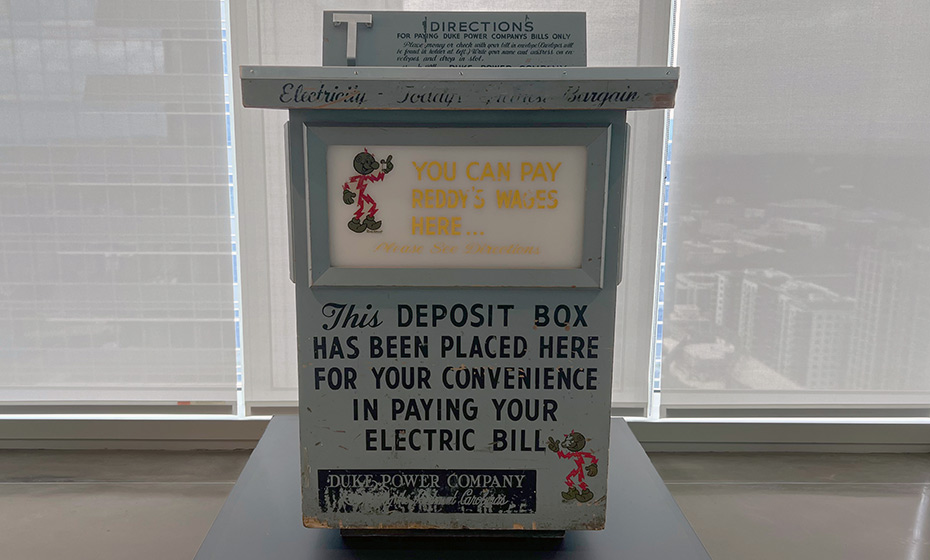
He compares the archives to a family tree – where every meter, letter, logo and blueprint adds to the company’s collective identity.
“We’ve been around more than 120 years as Duke Energy, but when you include our legacy companies, we’ve been serving communities for more than 180 years,” Hamrick said. “Our customers may not see that every day, but it’s in everything we do. We flip a switch because someone before us built the station, laid the line and kept the lights on.”
And thanks to Hamrick, that story – and the thousands of pieces that help tell it – will be around for generations to come.


