


On a sprawling, 700-acre field in Alachua County, Fla., thousands of solar panels reflect the light of a clear, blue sky. The massive complex, High Springs Renewable Energy Center, is part of Duke Energy’s expanding solar portfolio and the company’s continued efforts to provide reliable, affordable and increasingly clean energy for its customers and communities – now and for years to come.
From 2022 to 2024, Duke Energy established 10 new solar sites across Florida as part of the Clean Energy Connection program. Today, these sites generate a combined 749 megawatts (MW) of carbon-free electricity at peak output, powering the equivalent of roughly 230,000 homes.

Expanding solar helps displace the cost of fuel, like natural gas, that would otherwise be needed to generate electricity. That's impactful for customers since the price Duke Energy pays for fuel to power its plants is included in the price you pay for electricity.
Support solar energy. Earn bill credits.
What’s more: Duke Energy’s Clean Energy Connection program lets residential and business customers in Florida support renewable energy, subscribe to solar power and earn credits toward their electricity bills – all without equipment installation or maintenance.
Customers pay a monthly fee to help maintain these sites. And while the solar energy is routed to Duke Energy’s electric grid – helping serve over 2 million customers throughout Florida – they earn money back in bill credits.
There are no upfront costs, no application fees and no long-term obligation, said Travis Knous, lead strategy and planning manager for the Clean Energy Connection program.
“It’s a clean, cost-effective solution for business customers with sustainability goals or residential customers who may not be ready for rooftop solar panels, but want to support solar energy and help add more renewable energy to the grid,” Knous said. “It demonstrates how the company is innovating to both expand our generation fleet and keep up with the needs of a growing state.”
Although electric lines will not directly connect the solar center to a customer, customers can use this program to meet sustainability objectives. Duke Energy delivers the amount of renewable energy a subscription generates through the ownership of renewable energy certificates (RECs). Each REC represents 1 megawatt-hour (MWh) of electricity generated from renewable energy sources (e.g., solar, wind, biomass, or hydro) that displaces electricity on the grid that would otherwise come from traditional sources, such as natural gas and coal.These RECs can help customers achieve specific renewable and clean energy targets and goals.
While credit amounts vary, customers will see their bill credits grow over time – the longer they stay enrolled, the larger the credits can become. Duke Energy customers who qualify for income-based assistance will be eligible for immediate savings through the program’s income-qualified component. Visit this webpage to enroll or learn more about the program.
Years in the making
The now-operational solar sites are huge undertakings. Construction on each one takes between one year and 15 months, with development and permitting starting about three years before that.
“The size and scope of these projects is different from anything else I've done,” said Duke Energy Florida-based Project Director Coy Graham, who has worked in the field for over 20 years. “Hundreds of people across several Duke Energy teams, including outside contractors, collaborated for years to get the sites functioning.”
It's a "coordinated dance” that starts with selecting an engineering, procurement and construction (EPC) firm to build the site and complete most of the engineering work while Duke Energy supplies the main transformer and the solar panels.
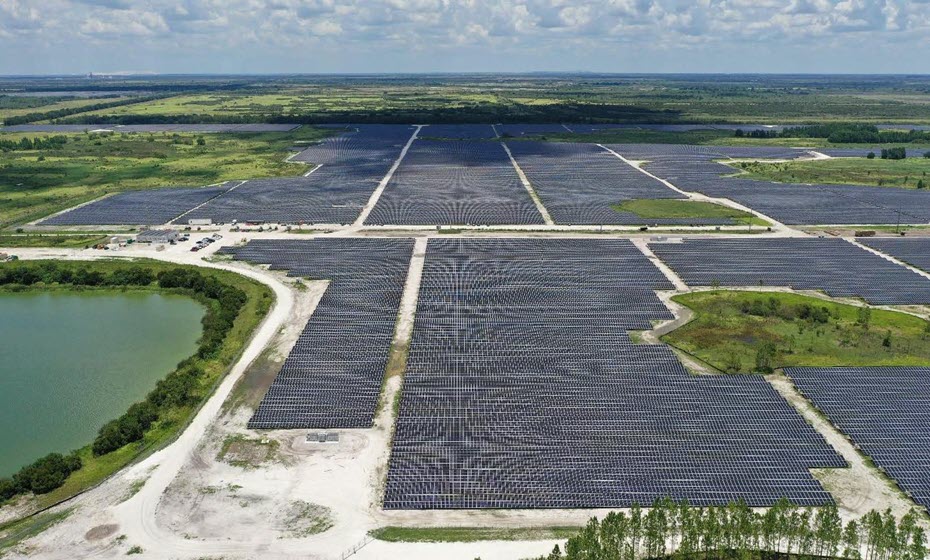
Meantime, another Duke Energy team would research available space, considering purchase and leasing options. “You can’t just go anywhere,” Graham said. “We typically need land control of 500 to 700 acres, near a major transmission line with the right permitting.”
Preparing for the future
Vanessa Goff, who has extensive experience developing renewable energy projects, oversees solar development initiatives in Florida. While the company maintains a strong focus on expanding renewables across all service areas, Goff said new investments in solar energy will be especially significant in Florida.
“Over the next three years, we’ll be adding 12 new sites, bringing the total to nearly 40 sites that will produce about 2.4 gigawatts in Florida,” Goff said. “I’m really excited to see how this technology continues to diversify, modernize and strengthen our electric grid moving forward.”
Clearly, the future is bright for solar in Florida.


