


Duke Energy’s service areas include some of the country’s most beautiful natural areas. About 200,000 miles of above-ground power lines wind through a six-state footprint that includes the highlands of Kentucky, the mountains of western North Carolina, and the towering willow oaks of Charlotte. Yet trees and vegetation can pose hazards to power lines and thus, reliability.
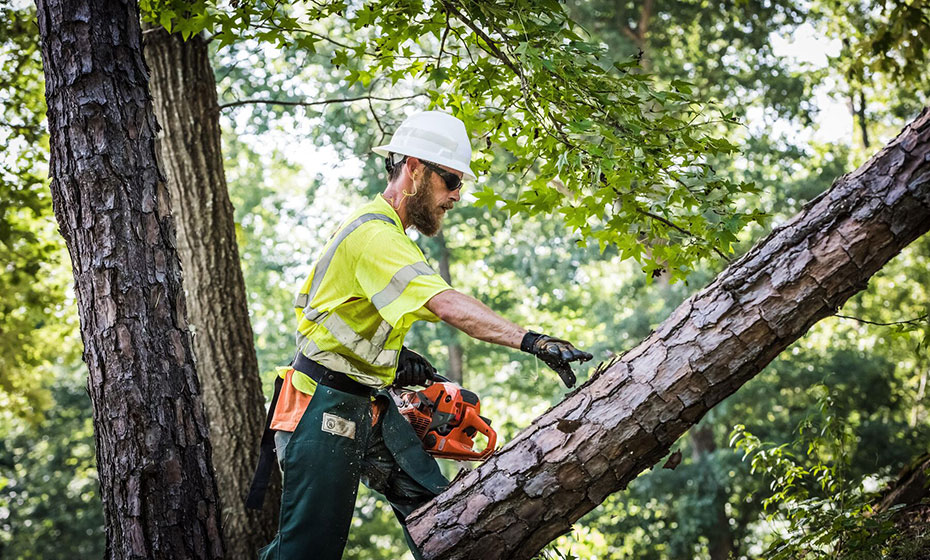
“Our customers want reliable power – in both good weather and bad,” said Wesley Frick, manager of distribution vegetation at Duke Energy. “And while the trees that thrive in our communities are a source of tremendous pride, they are also one of the main causes of power outages.”
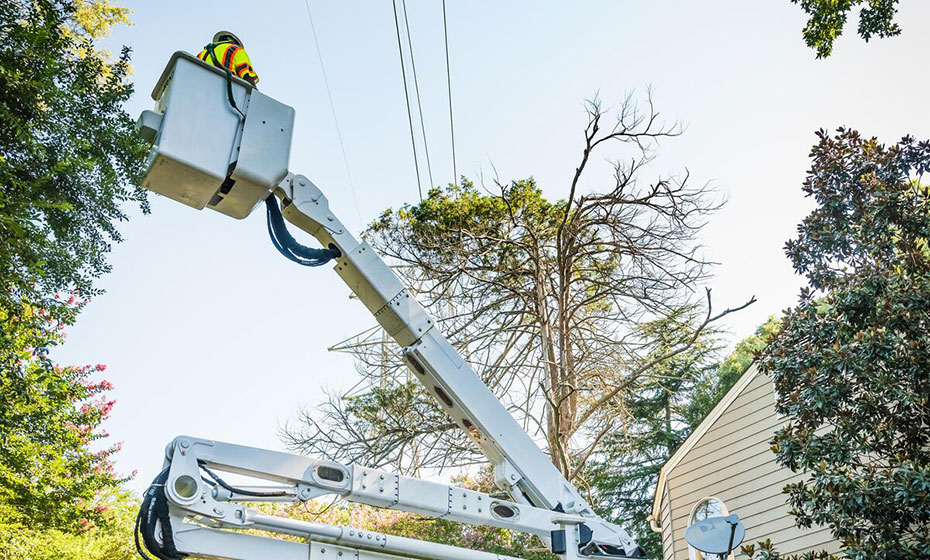
The company conducts regular inspections and clears trees and vegetation that may interfere with power lines. Integrated vegetation management (IVM) practices consider the voltage and type of line, as well as the type of vegetation and its distance from the line, to manage costs and determine if work is needed.
“The objective is to maintain the lines – before the trees and brush are close enough to cause outages – in a manner that is consistent with good arboricultural practices,” Frick said. “We also realize each tree is different and must be considered individually. Trees with trunks close to power lines may require much more pruning than trees located farther from the line, for example.”
From handsaws to helicopters
Because of the varied terrain Duke Energy covers, the company employs two vegetation teams and a variety of pruning tools and methods to tackle this work.
One is the distribution vegetation management team, which focuses on the lines that carry electricity throughout a town or community from substations to the homes and businesses that we serve; the other is transmission, which manages vegetation around high-voltage lines that cover long distances.
Together, they apply a careful, integrated strategy that is guided by several goals: to prevent power outages, provide safe and reliable service, keep customers informed and protect the environment.
Many who work on these teams are certified arborists who have an ever-evolving mission to ensure that nature and power lines coexist safely.
“Certain trees and vegetation can coexist but it’s location and species dependent, so we work with customers to evaluate their needs and ours,” said Korey Meadows, manager of transmission vegetation at Duke Energy. “For me, there will never be a higher priority than safety and reliability, so we often have conversations with property owners to educate them about why this work is so important.”
The art of tree pruning
The distribution and transmission vegetation teams not only address threats of the present moment but also anticipate how growth may interfere with power lines years from now.
A small Leland cypress – a popular backyard tree that can grow 4 feet a year – can become a hazard if it is planted near a line. Some trees may appear to be a safe distance from lines, but an 80-foot diseased tree can pose a hazard to a power line 60 feet away. If that tree were to fall, it could impact the line, as well as the safety of utility workers.
“We look at our entire transmission system at least a couple times a year through different means,” Meadows said. “Any delay in maintaining vegetation today will become a bigger, more expensive problem tomorrow.”
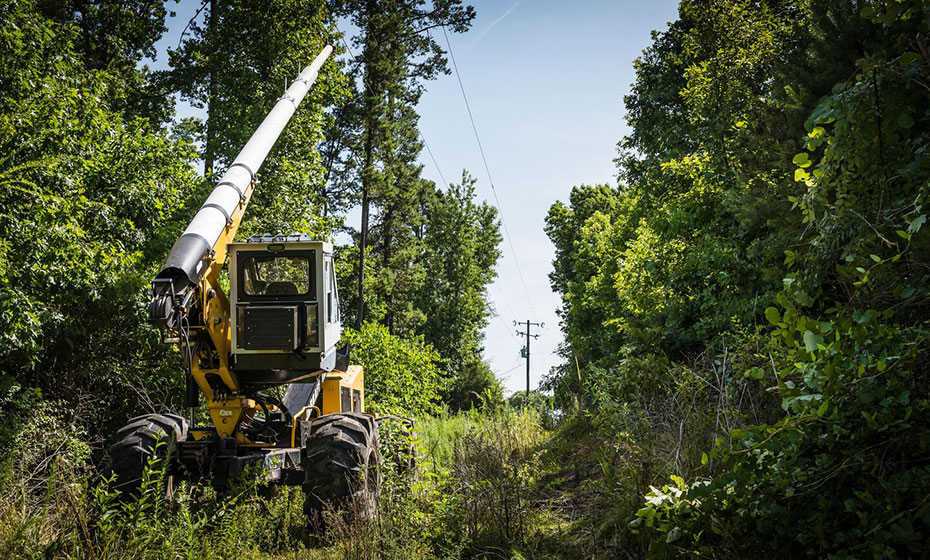
To service areas within urban or suburban settings, distribution may use chain saws and pole pruners, but to manage vegetation in rural areas, they might use a mechanized trimming tool known as a Jarraff. With a boom that can telescope 75 feet into the air to trim high branches, the mechanical side trimmer can safely and efficiently provide vegetation clearance around power lines.
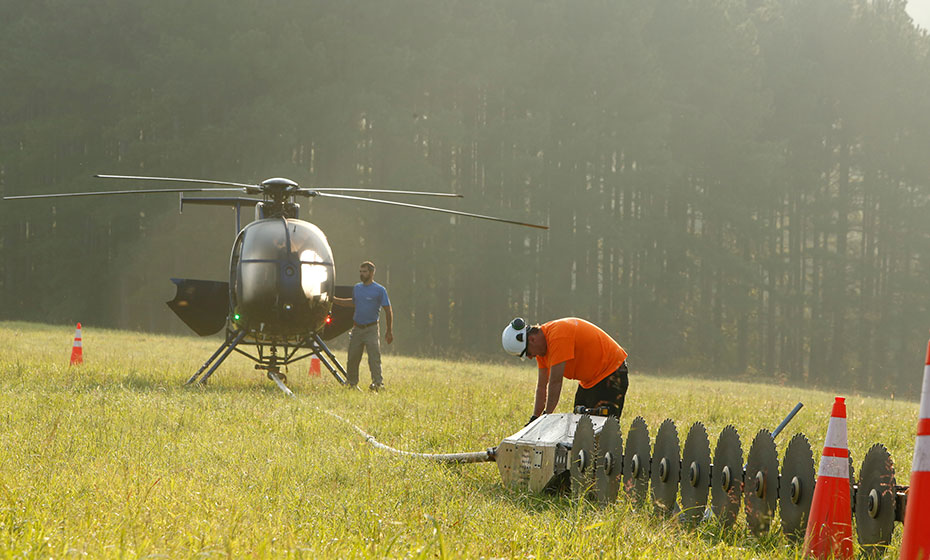
In harder-to-reach areas, a 33-foot aerial saw enables arborists to trim trees from helicopters. Aerial trimming is also used in response to major storms and flooding in Duke Energy-served communities; Frick said it is safer and more economical to trim areas in rough terrain that would be difficult to reach on foot.
An integrated approach
Vegetation management uses methods endorsed by the tree care industry, which protect the trees, wildlife habitats and endangered species. For example, teams use pruning techniques to promote future growth and direct it away from power lines.
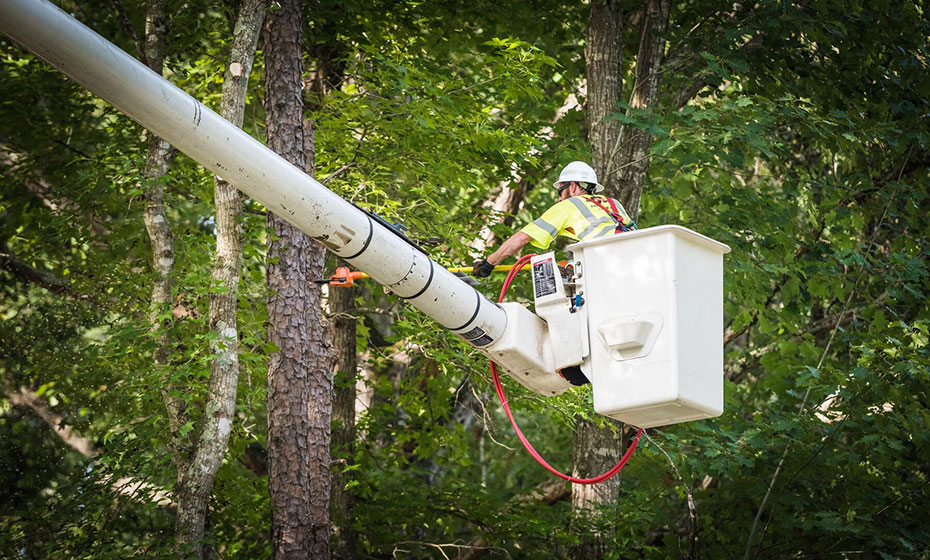
“We adhere to the industry’s arboricultural best practices to maintain the trees’ health,” Frick said. “When we’re done, we should be leaving the tree in a manner that is not detrimental to the health of the tree.”
They protect species within these areas as well, creating buffer areas around the nests of bald eagles and adhering to schedules that protect endangered bats. They even protect flowers; the Schweinitz’s sunflower in Cowans Ford Wildlife Refuge in Huntersville, N.C., is an endangered species, and one of the rarest sunflowers in the United States. Vegetation management works with the company’s Natural Resource Group to schedule their work for times of year that will not disturb the flower.
“Applying those practices allows the sunflowers to propagate and be present there,” Meadows said. “And now it continues to grow and be happy and thrive there.”
Keeping customers informed
Frick and Meadows understand that, for many customers, trees are personal. Few people enjoy the sight of a Duke Energy team coming into their neighborhood with saws. For that reason, they make this job personal, too.
Depending on the project, customers may be notified through methods like door hangers, text messages, emails, phone calls, letters, annual bill inserts or in-person contact. The company prioritizes conversations with customers, listening to their concerns and sharing how the work is meant to protect them.
Vegetation management also works with the Duke Energy Foundation to host tree planting events where they give away free, slow-growing trees and talk with property owners about where best to plant them, encouraging the public to be partners in this work. When the right tree is planted in the right place, it won’t pose a danger to power lines or people.
“While we do have to prune and take down a lot of trees throughout the year, we give back to the community and show that we do care about trees and about the environment,” Frick said. “If we can help communities we serve plant the right tree in the right place, trees and power lines can coexist and that’s a win-win.”