


As Duke Energy celebrates 125 years of powering Florida, we honor the company’s rich history and look forward to a bright future.
Headquartered in the heart of historic downtown, Duke Energy Florida and its legacy companies are nearly as old as the city of St. Petersburg, which had about 300 residents when Frank Allston (F.A.) Davis introduced wood-powered electricity in the small town.
Today, that company supplies power to 2 million customers across 35 counties, with approximately 3,800 employees across the state who live and work in Duke Energy-served communities, and we remain a powerful economic engine, community champion and provider of safe, reliable and increasingly clean energy.
Duke Energy’s economic development team has helped expand or attract 345 companies to Florida, resulting in more than 50,400 new jobs since 2001. We’ve also expanded solar and innovative clean energy technologies that will move us toward a more sustainable energy future for this generation and the next. More than 25 grid-tied solar plants will be in service by the end of 2024, investments that will help reduce emissions and Florida’s dependence on fossil fuels and increase fuel generation diversity.
Our progress is one that we’re proud of – we’ve truly grown together.
In the beginning
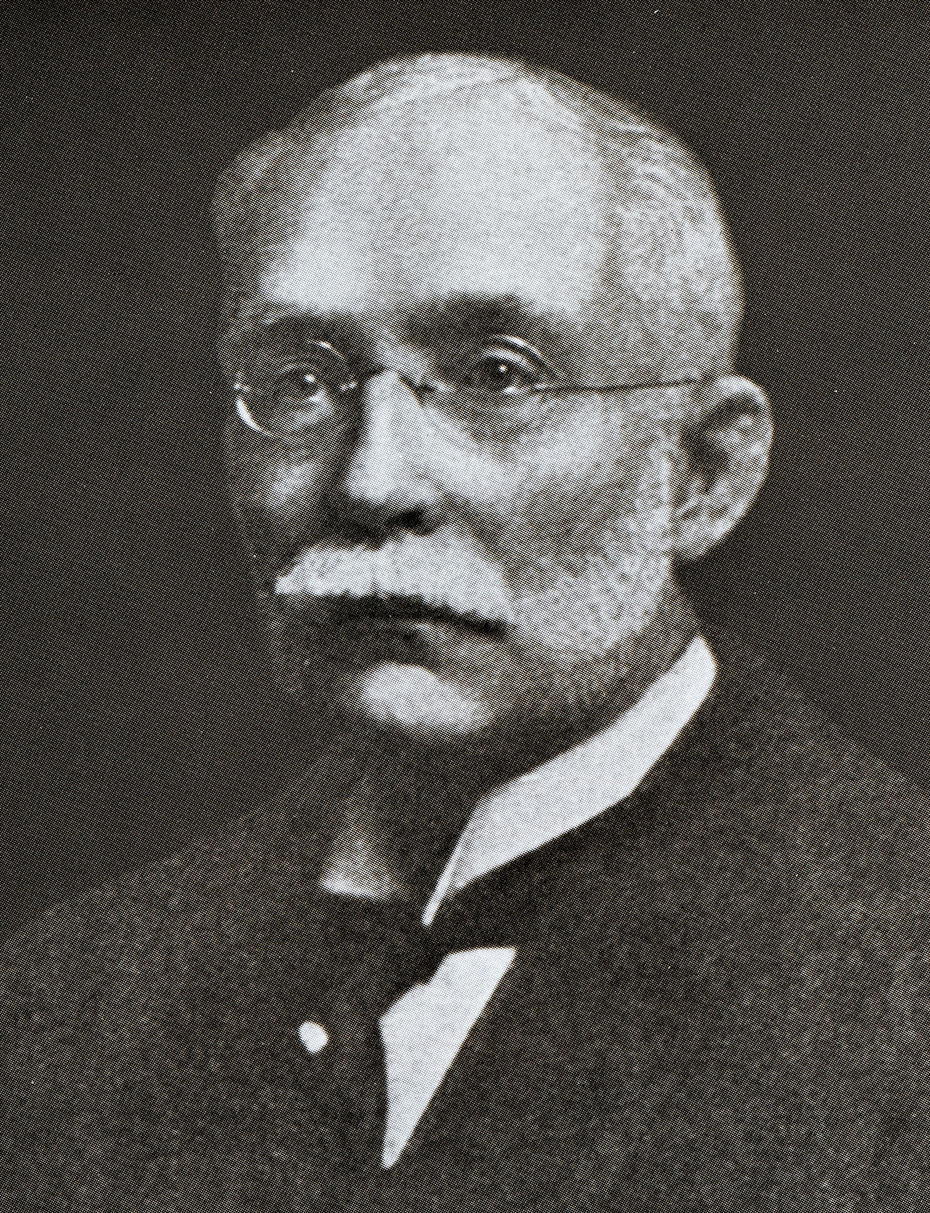
The 1890s: F.A. Davis, a Vermont farm boy turned publishing executive, moved from Philadelphia, P.A., to Tarpon Springs, Fla., in winter 1890. He recognized the potential of Pinellas County as a winter destination. It just needed infrastructure, which he was willing to provide with funds invested by fellow Philadelphian Jacob Disston. With Disston’s money, Davis built an electric plant, powered by a 50-watt dynamo. But the residents of Tarpon Springs seemed curiously indifferent to the powers of electricity, content to continue lighting their streets and homes with kerosene.
Davis packed his small power plant onto a horse and a cart and hauled it down to the waterfront of the small town of St. Petersburg. The lights flickered on for the first time on Aug. 5, 1897. Despite the power plant’s rickety appearance, the citizens of St. Pete were thrilled with the 30 incandescent streetlights that lit the streets from dusk to midnight.
Davis died of heart failure in 1917, but the power company he started is still going strong. Duke Energy is now a publicly traded company (NYSE: DUK).
1899: St. Petersburg Electric Light and Power Company receives its state charter, making July 18 its official anniversary. The company holds its first shareholders meeting and floats its first bond issue to raise $10,000 (about $378,000 in today’s dollars).
1911: Twenty-four-hour electric service begins. Prior to that, streetlights were only illuminated at certain times of day. In addition, meters are installed so employees can track – and bill for – usage. Electricity costs 20 cents per kilowatt-hour (kWh).
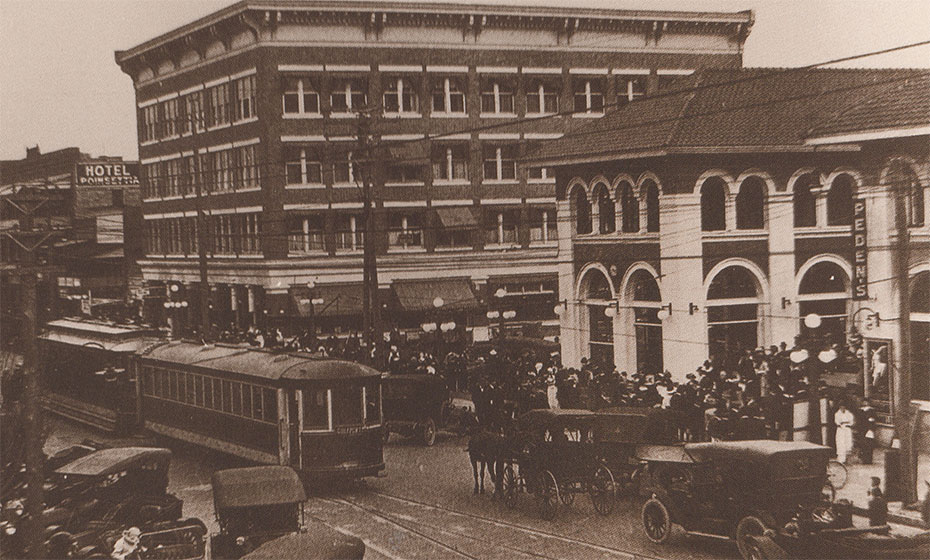
Keeping up with demand
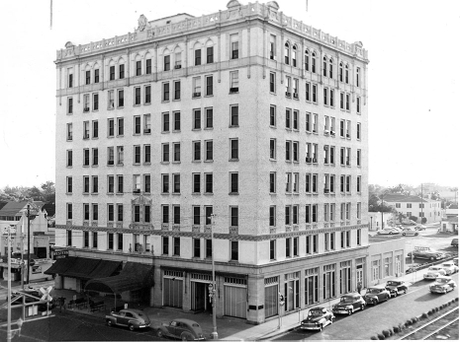
1925: The 1920s were a period of explosive growth in St. Petersburg. Its population grew from 14,000 to 40,000, with double that number in the winter.
Davis’ company moves into a new stately, brick headquarters building at Fifth Street and First Avenue South – across the street from the St. Petersburg Times.
In addition to being occupied by company employees, the building offered business and professional offices “with every modern convenience,” said Chris Hamrick, archivist at Duke Energy. “The first floor housed the sales showroom, where you could inquire about service, bill payments and even purchase merchandise, things like appliances, lamps, toasters and so on.”
This would serve as the company’s headquarters through the early 1970s. The building was demolished in 1979.
1927: The company changes its name to Florida Power Corporation, reflecting the growth mindset of company leaders. “’Florida Power’ didn’t limit the company to any certain geography,” Hamrick said. “It was a name that allowed the company to continue to grow without having to ‘outgrow’ the name.”
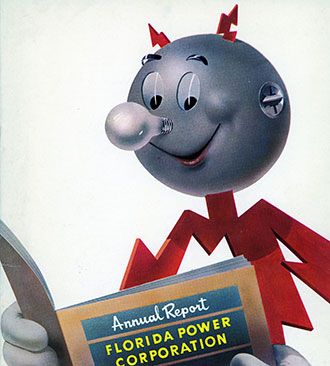
1939: Reddy Kilowatt is introduced in Florida. The beloved mascot was created by Ashton B. Collins of Alabama Power Company in 1926, and shareholder-owned utilities were offered the opportunity to adopt Reddy as a mascot.
“All of our legacy companies used Reddy Kilowatt,” Hamrick said. “People sometimes referred to the character as a company spokesperson. You’d see him in newspaper ads, on your bill, on stationery and envelopes, company publications like annual reports and signage. Everybody liked Reddy.”
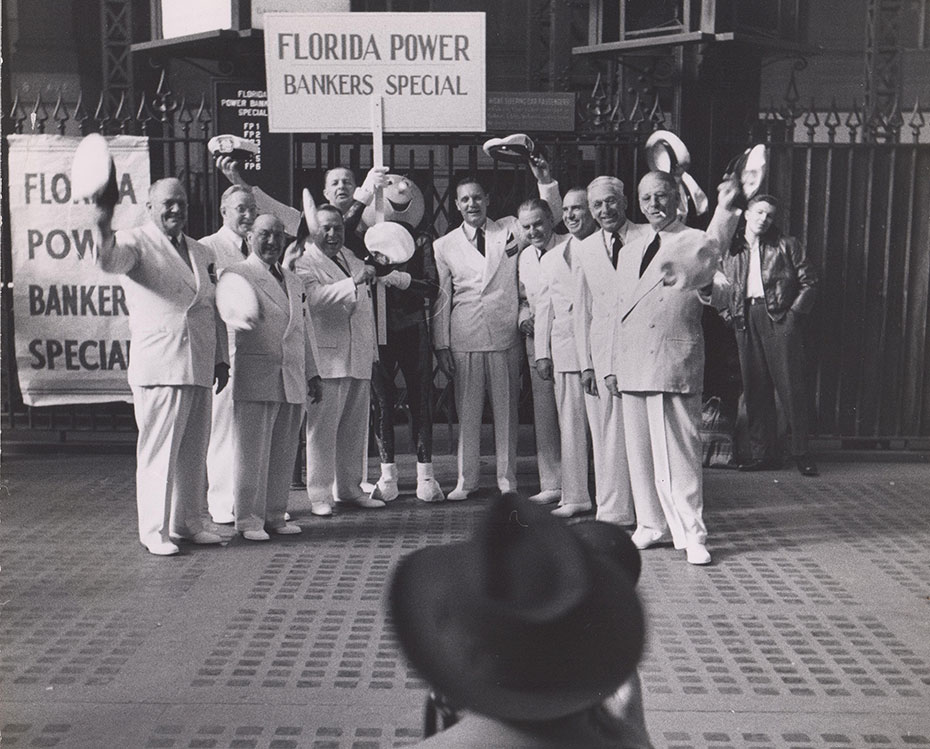
1949: Albert Willis Higgins stages the “Bankers' Tour” promoting Florida Power territory to 90% of the nation’s leading investment and commercial bankers. Higgins served as Florida Power’s president twice – from 1928 to 1933 and again from 1937 to 1950.
Higgins created the fundraising tour because he “wanted to promote the company and the territory we served,” Hamrick said. “Retirees and tourists were flocking there. Everything was being modernized and electricity usage was increasing. So, Higgins took investors and executives on a tour throughout Florida Power’s territory to show them all the opportunities for investment and expansion.”
The tour was such a novel idea that it was highlighted in a pictorial in Life magazine.
Some firsts in the ‘50s
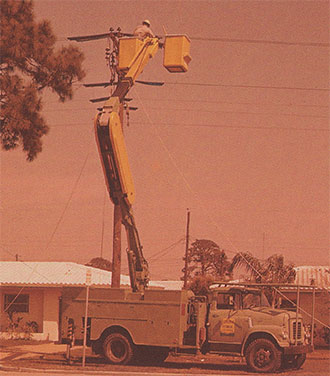
1954: Florida Power makes history when it procures and uses the first aerial bucket truck in the Sunshine State. The Skyworker is an early example of the company’s focus on innovation.
1955: Altah Booth Shaver becomes the company’s first woman officer when she’s elected assistant secretary of the company. She began her career in 1930 as a secretary in the treasury department. Shaver retired after 24 years of company service.
1963: Make way for clean energy. Florida Power buys land in Citrus County, Fla., for its Crystal River complex that will include fossil units and a nuclear power plant.
Water, water, everywhere
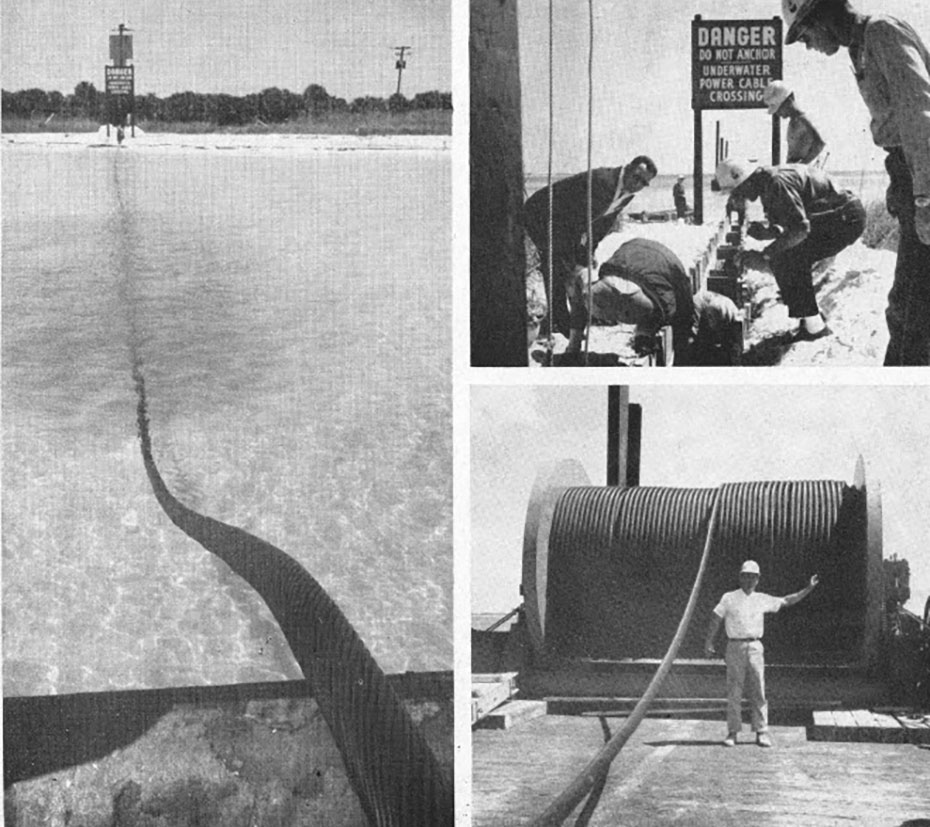
1963: In another example of innovation, Florida Power places a specially designed underwater cable in the Gulf of Mexico between Egmont Key and Mullet Key. It’s believed to be the longest one-piece installation in Florida. The cable is a 15,000-volt conduit for a current flowing from Florida Power to serve the U.S. Coast Guard facilities, including a lighthouse and power station.
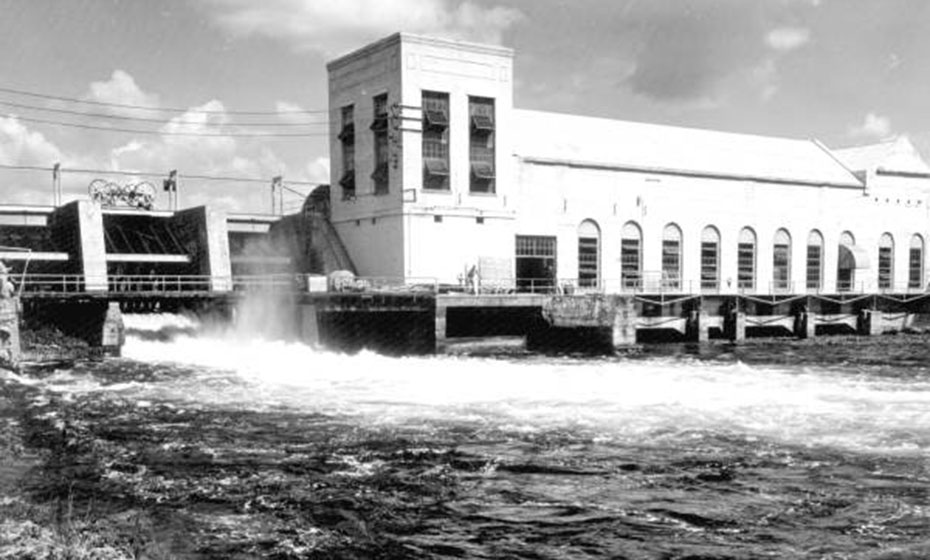
1965: At the end of the 19th century, prospectors and entrepreneurs flocked to Dunnellon, Fla., to mine phosphate. Mining operations demanded electricity, so Florida Power built a hydroelectric dam here in 1909. The dam stopped up the Withaloochee River, creating a 3,500-acre body of water today known as Lake Rousseau. Florida Power donated its 3,880-acre Dunnellon Hydraulic plant site to the state to use as a park and recreation area in 1965.
Duke Energy has long worked to create powerful communities through charitable donations and volunteer service. In 2023 alone, Duke Energy Foundation charitable giving totaled over $4 million and was focused on economic development, climate resiliency, and justice, equity and inclusion. Additionally, Duke Energy employees and retirees contributed more than 15,000 volunteer hours and nearly $1 million to Florida nonprofits through financial donations.
Lovable leaders
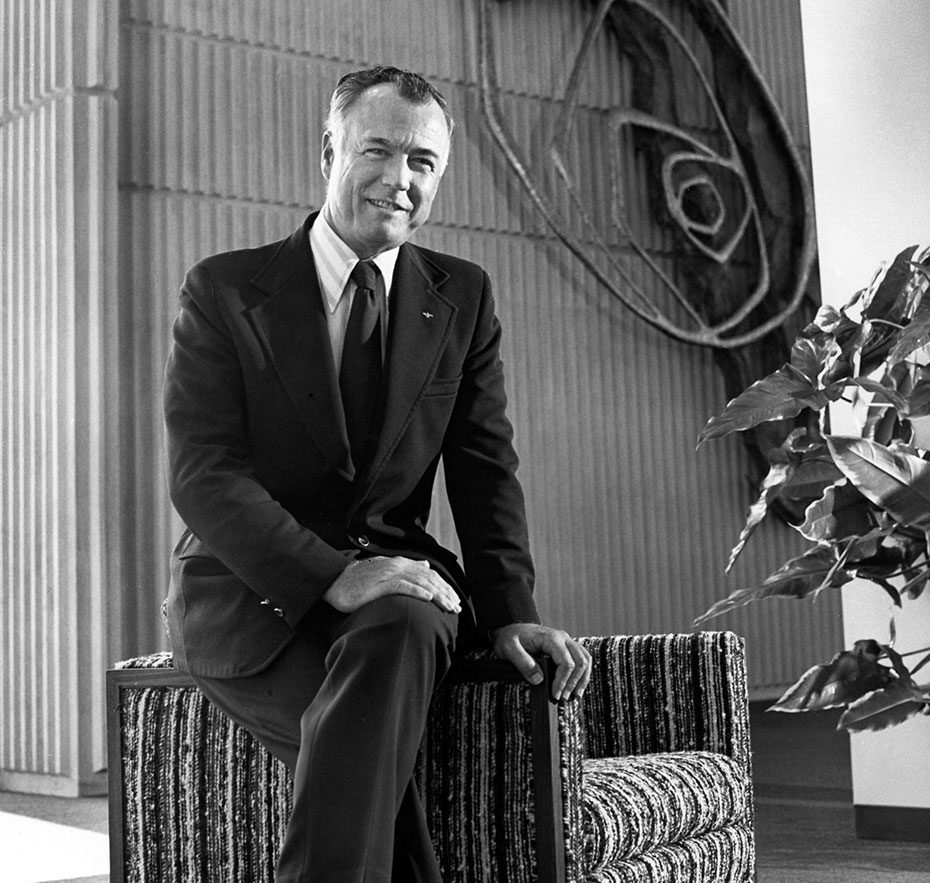
1972: Andrew H. (“Andy”) Hines is named president. Hamrick describes him as “the Bill Lee of Florida,” comparing Hines to the legendary former chairman and CEO of Duke Power Company and grandson of William States Lee Sr., who helped found Duke Power and was its first chief engineer.
Hines, who died in 2021 at age 98, was “considered one of the visionaries that shaped the development of downtown St. Petersburg, served 17 years as chief executive of the power company that would become Progress Energy before it was acquired by Duke Energy,” wrote the Tampa Bay Times.
Hines joined Florida Power as an assistant production engineer. He became president in 1972 and, later, CEO and chairman.
The modern era
1972: The company leaves its headquarters building – which it has occupied since 1925 – for an enormous complex called the General Office Complex. “There was plenty of parking, a cafeteria, a library, warehouse – everything self-contained and in the same footprint,” Hamrick said. “Until now, the company operated multiple buildings across the St. Pete landscape. This move allowed them to centralize operations.”
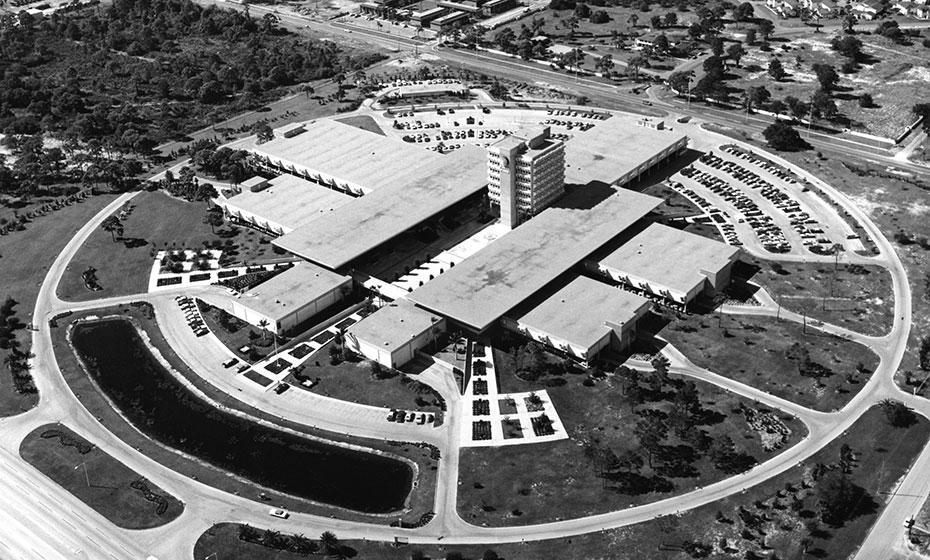
1977: Clean energy becomes increasingly important. Construction on the Crystal River Nuclear Power plant is completed. The plant has a generating capacity of 864,000 kilowatts (kW).
This is about the time (1978) Tony Salverezza joined Florida Power. The company then employed 3,000 people in the state. Today, Salverezza has about 3,700 Duke Energy colleagues in Florida. (And that’s not counting the 3,800 Duke Energy retirees or many contract workers scattered throughout the state.)
1986: Florida Power begins serving its 1 millionth customer, thanks to its robust distribution network. The company has about 5,100 miles of transmission lines, 18,100 miles of overhead distribution and about 16,670 circuit miles of underground distribution lines.
Duke Energy remains committed to building a smarter, brighter energy future for customers by investing in cost-effective grid improvements, innovative clean energy technologies and customer solutions and options that will help reduce outages, provide faster response times when outages occur, improve communication with customers and continue meeting the needs of Florida’s current and growing population.
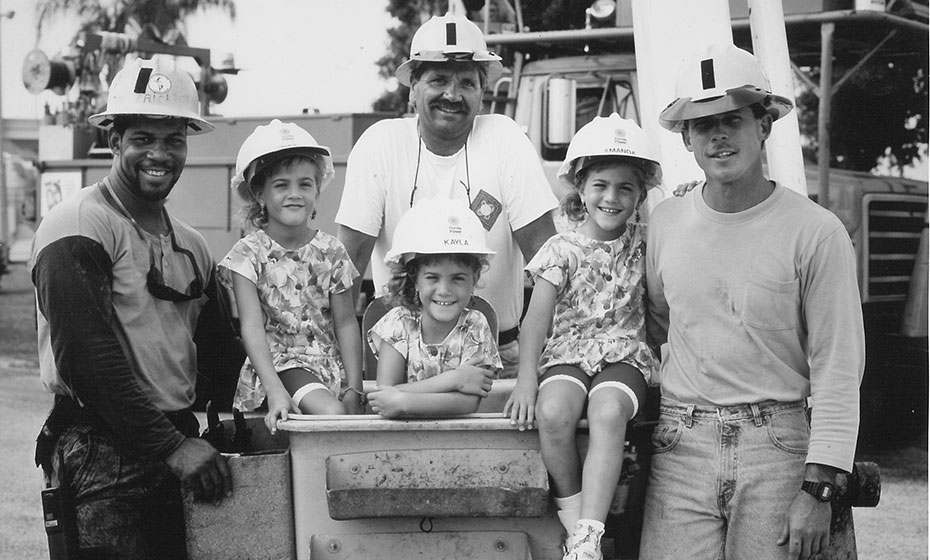
1987: Florida Power contributes to United Way and other nonprofit charities in the communities it serves.
Duke Energy Florida, its foundation and employees continue to build and nurture the places we call home through millions of dollars in local grants, sponsorships, donations and economic development efforts that are making a difference in the community and helping St. Petersburg thrive now and well into the future.
1995: Category 4 Hurricane Opal hits Florida. Its maximum sustained winds were measured at 150 miles per hour when Opal was about 290 miles southwest of Pensacola. Nine people on the U.S. mainland were killed in the hurricane, and property damage was estimated at $2.1 billion.
In addition to storm response and outage restoration, lineworkers help make power distribution more efficient – working on projects that are strengthening the grid against severe weather, modernizing the system to ensure a smoother transition to cleaner energy, and giving Duke Energy customers more ways to use energy the way they want to use it.
Line teams are also expanding the company’s network of smart, self-healing technology, automated technology that can reduce the number of customers impacted by an outage and speed up restoration efforts to restore power faster.

1999: Ring those wedding bells. Carolina Power and Light Co. and Florida Progress Corp. announce their union after both companies’ boards unanimously approve an agreement to combine the two into one. The new company is Progress Energy. The merger won’t become official until 2000.
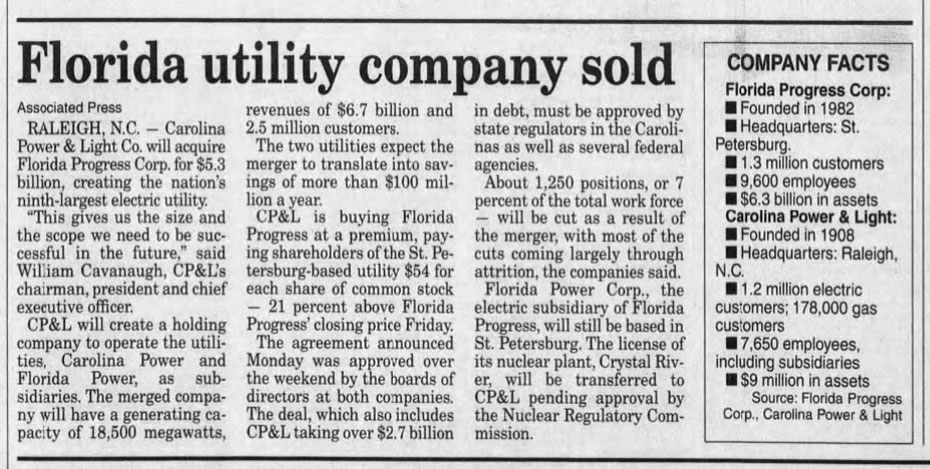
2012: Duke Energy and Progress Energy combine their companies, expanding Duke Energy’s services to Florida and forming one of the largest electric utilities in the United States.
2024: Duke Energy Florida celebrates its first 125 years. The city of St. Petersburg declares July 18 “Duke Energy Day.”
Thank you for 125 years! We’re proud to be your hometown power company.