


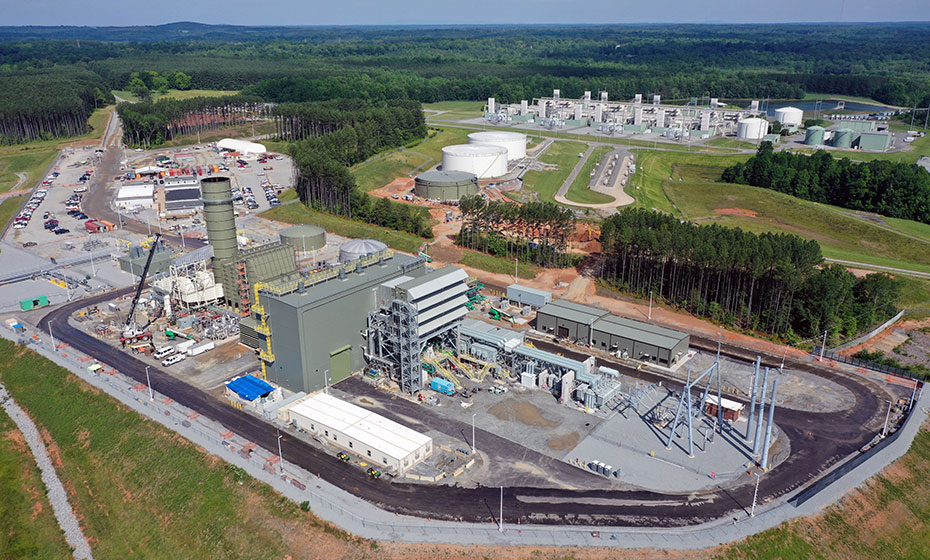
On a frigid winter morning in Charlotte, N.C., as energy demand surged, Duke Energy’s new Lincoln 17 unit was ready. Within minutes, it generated more than 400 megawatts (MW) of electricity – powering hundreds of thousands of homes and businesses across the Carolinas when customers needed it most.
Unlike some coal plants, which could take up to 48 hours to start, Lincoln 17 can reach full power in roughly 10 minutes – faster than any other turbine of its kind. This flexibility is essential on cold winter mornings or hot summer afternoons, when customers use a lot of electricity.
“On high-energy demand days – like those we saw in January – Lincoln 17 performed efficiently,” said Jeff Flanagan, Duke Energy’s general manager of Carolinas Generation West. “It can operate for four or five hours during peak demand and then shut down, providing flexibility that older plants can’t. During extreme conditions, it runs almost like a baseload unit, helping to maintain reliability at a lower cost.”

With its rapid response time, Lincoln 17 is a key part of Duke Energy’s plans to meet and maintain reliability amid rising energy demand. This advanced natural gas technology replaced the capacity of the final two units at Allen Steam Station, which retired at the end of 2024 after 67 years of service.
Kevin Murray, vice president of project management and construction at Duke Energy, emphasized this “replace before retire” strategy, which ensures new, efficient generation is in place to serve customers before retiring older plants.
“Lincoln 17 came on line in December, allowing us to add more than 400 megawatts of new generation while retiring the last two units at Allen. We also achieved a 50% carbon dioxide emissions reduction in the megawatts we retired,” Murray said of natural gas, which produces about 50% less CO2 than an equivalent coal plant.
Efficiency that benefits customers
Beyond reliability, Lincoln 17 offers another major advantage: efficiency. It earned the Guinness World Record title for most powerful simple-cycle gas plant in 2022.
“This unit is 34% more fuel efficient than other gas turbines on our system,” Murray said. “Using less fuel to generate energy helps lower costs for all of our customers.”
The turbine’s advanced technology not only improves fuel efficiency but also enhances Duke Energy’s ability to maintain and repair the unit.
“Allen was 67 years old, and finding parts for a plant of that age was becoming increasingly difficult; some of its technology doesn’t exist anymore,” Flanagan explained. “With Lincoln 17, we have a modern system that can be maintained reliably for years to come.”
A balanced energy mix
While natural gas remains a crucial part of today’s energy mix, Duke Energy is also investing in renewables, battery storage and emerging technologies to enhance the grid’s capacity and accommodate growth.
The retired Allen Steam Station site is being evaluated for battery storage, which stores excess energy and then releases it when customers need power. The first battery is already under construction and is expected to be on line by the end of 2025, with a second battery in the planning stages and more being considered.
Additionally, Duke Energy recently received regulatory approval to install two next-generation natural gas turbines at Marshall Energy Complex in Catawba County, N.C., using similar technology as Lincoln 17. Those units should be on line serving customers by 2029, just before the station’s two oldest coal units are scheduled to retire.
By combining natural gas with investments in renewable energy, the company can deliver reliable power today while also preparing for the future. Duke Energy’s strategy prioritizes a diverse energy mix that ensures power is available whenever customers need it – regardless of weather conditions or fluctuations in demand.
“We need a balanced approach to power generation,” Murray said. “Solar is important, but there are times when the sun isn’t shining, or clouds pass over. That’s why we rely on an all-of-the-above strategy – nuclear, natural gas, solar, hydro and battery storage – to ensure customers have power when they flip the lights on.”
Supporting employees and communities
A smarter energy future isn’t just about technology – it’s about people. Some Allen Steam Station employees have transitioned to new roles at Lincoln 17 and other generating stations, ensuring their expertise continues to support reliable power generation.

Others, like Thomas Slade, are sharpening their operational skills at Duke Energy’s Regulated Renewable Operations Center in Charlotte – a central hub for managing 5,500 MW of hydro, solar and batteries on the system.
At the same time, Duke Energy is working with local communities to reinvest in retiring plant sites in ways that benefit residents. Take W.S. Lee Station, which began serving customers in 2018. The 750-MW combined-cycle natural gas plant (a $700 million investment) replaced two coal-fired units at the Anderson County, S.C., site.
The W.S. Lee project has benefited more than 150 companies locally, in South Carolina, and around the world. During the height of construction, the project created more than 600 temporary construction jobs and provided about $12 million in work to local subcontractors.