


You flip a switch, and the lights come on. You plug in your phone, and it charges. Electricity is something we all depend on, yet few people stop to think about how its cost is determined – until the bill arrives.
When rates change, customers may ask: Why is my bill higher? Who decides these prices? Can Duke Energy raise rates whenever it wants?
The short answer: No, Duke Energy cannot raise rates on its own. Electric rates are set through a highly regulated process, shaped by many factors like fuel costs, regulatory requirements and the cost to build, operate and maintain the equipment that produces and delivers electricity.
Understanding what goes into your electric bill can help you make sense of the numbers – and even find ways to save.
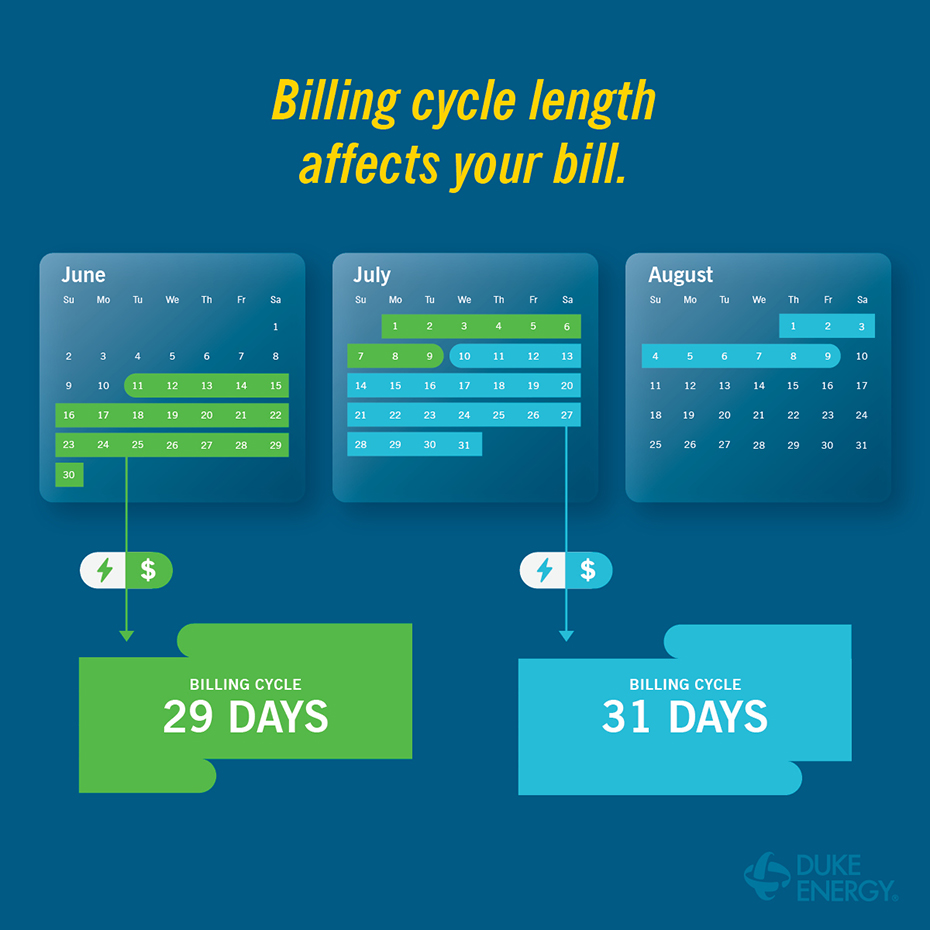
The three main parts of your bill
Duke Energy electric bills include three key components. The names of charges may vary by state, but the structure is generally consistent.
1. Basic Customer Charge
This fixed monthly fee covers the cost of maintaining your account – such as reading your meter, preparing your bill and providing customer service. It stays the same no matter how much electricity you use.
2. Usage-Based Charge
This is the largest part of most bills, calculated based on your electricity usage in kilowatt-hours (kWh) and, for some customers, demand in kilowatts (kW). The more you use, the higher this total will be. For example, your air conditioner must run longer during summer months to maintain the temperature on your thermostat, which will increase your total usage, causing this part of the bill to rise.
3. Riders
A rider is a charge that is not included in a customer’s standard rate; some are flat monthly charges while others vary based on energy usage.
Riders enable Duke Energy to recoup the cost of specific programs, such as energy efficiency programs to help customers reduce their bills, and annually adjusted costs like the price we pay for fuel to power our plants. Riders can also reflect the costs incurred by Duke Energy to repair the grid from hurricanes, ice storms and other severe weather.
Some riders increase your bill while others can result in a decrease. For example, if the cost of natural gas used to make electricity is lower than expected, Duke Energy would pass through the savings to customers in their rates in future bills.
Keep in mind that riders vary depending on where you live. In Ohio, for example, customers have power distribution and energy procurement riders because Duke Energy must purchase power to serve Ohioans.
Who sets electric rates?
As a regulated utility, Duke Energy's rates are established through a public ratemaking process with regulators in each state, such as the Public Service Commission of South Carolina or Florida Public Service Commission.
The company can request rate adjustments for reasons like grid improvements or infrastructure investments, but regulators ultimately decide if rate changes are fair and necessary. This oversight ensures a balance between keeping electricity affordable for customers and allowing Duke Energy to make critical investments in maintaining and modernizing our system.
Public hearings are an essential part of this process. Customers, consumer advocates and other stakeholders have the opportunity to provide feedback, helping ensure transparency and accountability.
Why do rates change?
Many factors influence electric rates, including:
- Fuel costs: Fuel charges reflect the actual costs paid by Duke Energy to procure the fuel needed to generate electricity. Since market prices for natural gas and coal fluctuate, fuel charges are reviewed periodically, and any savings are passed on to customers in future bills.
- Economic conditions: Inflation, labor costs and interest rates all impact the cost of building, maintaining and operating infrastructure.
- Regulatory compliance: Environmental and other state and federal regulatory requirements, like transitioning to cleaner energy sources and conducting environmental compliance work, require additional investments.
- Storm recovery: Major storms can cause widespread damage, resulting in a large-scale restoration operation. Rather than increase rates all at once, Duke Energy may spread those costs over time to avoid bill “spikes” and ease the impact on customers.
- New infrastructure: As the Carolinas, Midwest and Florida grow, Duke Energy must invest in new capacity and grid upgrades to meet rising energy demand and replace aging plants and equipment. These investments support prosperous communities and economies while protecting reliability.
Managing costs to keep rates affordable
Realizing that no one likes surprises, Duke Energy has implemented rate adjustment mechanisms (overseen by regulators) to help make rate changes more gradual and predictable.
Instead of waiting years between rate updates, which can lead to larger, more sudden increases, these mechanisms allow us to make smaller, more frequent adjustments. This helps smooth out the impact of new investments in the energy grid, like storm hardening, new generation and technology upgrades.
Another area of innovation is performance-based ratemaking, which ties certain rate adjustments to reliability and efficiency standards. This encourages utilities to make smart, customer-focused investments while keeping costs in check and delivering the service customers expect.
More options to save
At the same time, new programs and incentives are giving customers more control over their energy usage and costs.
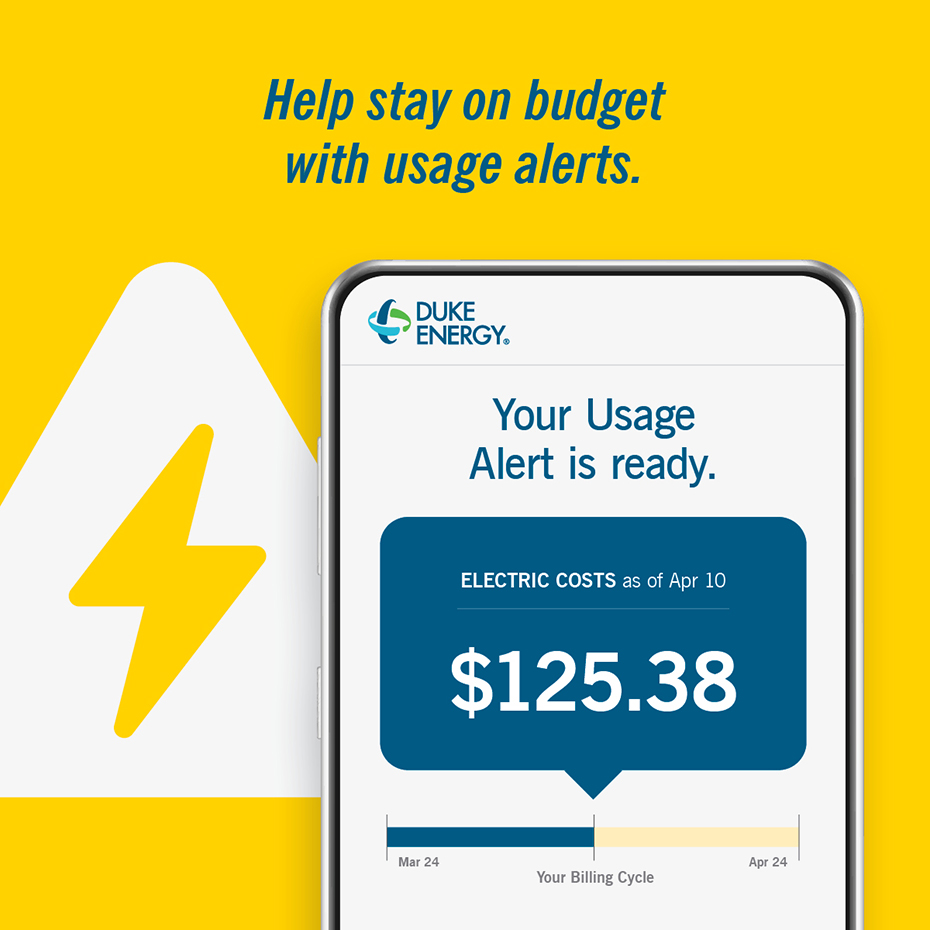
Monthly Usage Alerts help customers track their energy consumption mid-cycle so they can adjust before the next bill arrives. And the Duke Energy app is making it easier for customers to manage their accounts and access information about their service.
Duke Energy also provides flexible price options. With Time-of-use rates, for example, residential customers pay less for electricity by shifting use to off-peak times, like nights and weekends, when demand is lower and energy is cheaper. Doing laundry on weekends or running the dishwasher later at night can result in big savings for customers who enroll.
And as smart appliances and programmable thermostats become more advanced, most customers will have access to rate options that enable them to reduce costs by using energy during periods of lower demand.
Meanwhile, rebates and incentives are available to customers who invest in energy-saving improvements like smart thermostats and LED lighting. Using less energy helps reduce the amount you pay for electricity each month.
The bottom line
Duke Energy’s electric rates are set through a transparent, public process and require approval by regulators. Rates are influenced by a mix of economic, weather-related and operational factors, with opportunities for public input.
While no one enjoys seeing bills increase, the investments supported by rates are essential to keeping the system reliable, efficient and prepared for the future. By spreading costs out over time and offering ways for customers to reduce usage, Duke Energy works to keep power as affordable and reliable as possible.